

ChatGPT, Perplexity, Gemini and Google AI Mode name businesses and cite their sources. Generative engine optimization is the work of becoming one of those sources.
Counted is the part nobody else offers. Every month you get citation numbers for seven engines against a baseline taken before we started, with the prompts included, so you can verify every figure yourself.
Led by Phil Belleville, in search since 1995. Run through the Rank Intelligence Engine. Month to month, no contracts. Every number dated and checkable.
Book a free GEO strategy callSee the case studies
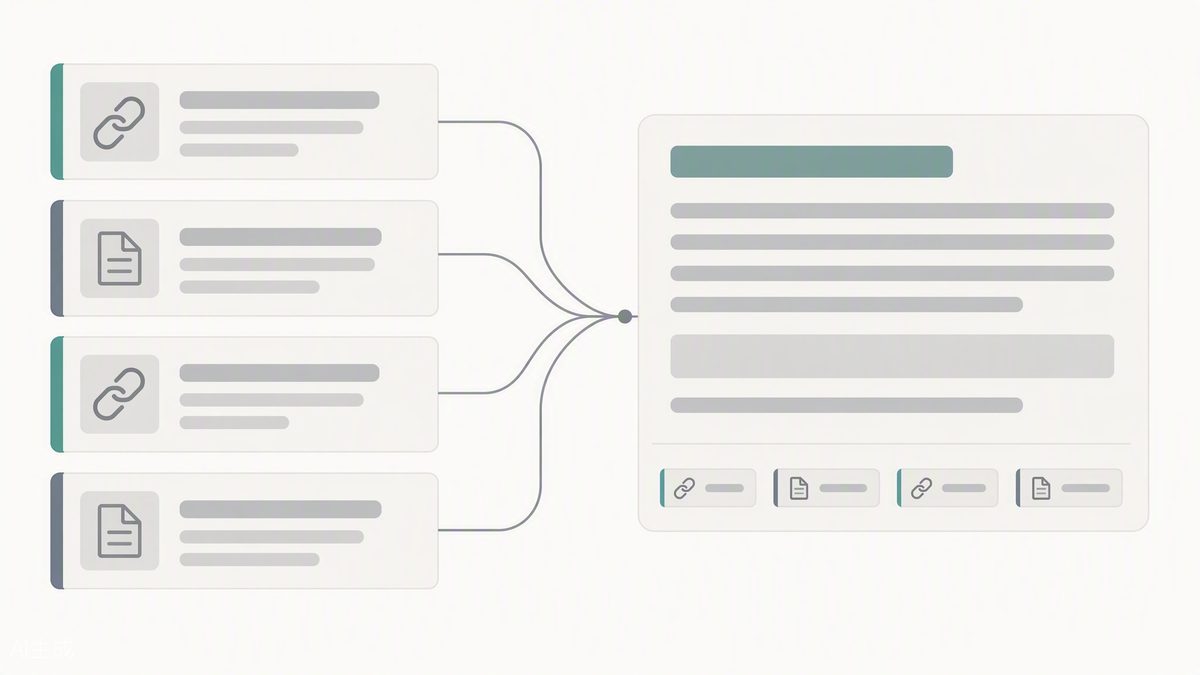
Generative engine optimization services, or GEO services, make a business one of the sources that AI engines cite when they generate an answer. The work maps which domains ChatGPT, Google AI Overviews, Google AI Mode, Gemini, Perplexity, Copilot and Grok already cite in a category, audits whether the client site is source-worthy, verifies the business entity including its Google Knowledge Graph record, builds the citable assets the business can genuinely support, earns third-party corroboration on the surfaces those engines read, and counts citations per engine every month against a baseline taken before the work started. Provided across the United States by AI Search Engine Optimization, led by Phil Belleville, in search since 1995.
Why AI Engines Cite Some Businesses and Never Mention Others
Ask an AI engine who to hire in almost any category and you get two or three names, a sentence on why each, and links to where the information came from. Those links are the whole game. They are the engine showing its work, and they are also the reason it felt confident enough to name anyone at all.
The businesses in that source set are rarely the largest and almost never the loudest. They are the ones the engine can stand behind. Before a system puts a business in front of someone, it is answering a question about its own risk: if this recommendation is wrong, what was it based on? A business described identically across its own site, its profiles, independent listings and third-party writing is a safe answer. A business whose own site makes claims nothing else in the world corroborates is not, however good the site is.
This catches out good companies constantly. A business rewrites its pages, adds structured data, does everything an on-page checklist asks, and remains invisible in ChatGPT while a smaller competitor gets named repeatedly. The work was not wrong. It was aimed at the wrong layer. Nothing outside that company’s own website said anything about it, and generative engines weigh outside sources far more heavily than most owners expect.
The second pattern is subtler and more damaging. Some businesses are not merely absent from the source set, they are actively discounted, because the mentions that do exist come from places these systems have learned to distrust. Purchased placements, syndicated releases, link networks. A business can spend years buying corroboration and end up worse off than one that bought none, which is a bitter thing to discover after the invoices have been paid.
What Generative Engine Optimization Services Cover
Citation source mapping
Before anything is built we find out which domains the AI engines currently cite when they answer questions in your category. That list is not a guess, it is pulled from the engines themselves, and it is usually nothing like the list an agency would assume. Those domains become the map for everything that follows.
Source-worthiness audit
An engine will not cite a page it cannot stand behind. We audit yours the way an engine does: can the claims be corroborated, is the author a real identifiable person, is the business the same business everywhere it appears, and is there anything on the site that would make a cautious system move on to a competitor.
Entity verification and the Knowledge Graph
Generative engines lean on entity records. If Google’s Knowledge Graph does not hold a clear record for your business, or holds one that conflicts with your own site, citations get harder for reasons that never show up in a ranking report. We measure the record, correct the inputs, and track its movement.
Citable asset creation
Some content gets cited far more than the rest: original data, plainly stated definitions, comparisons with real numbers, and first-hand accounts nobody else can write. We build the ones your business can genuinely support, and decline the ones it cannot, because a fabricated data asset is a liability rather than an advantage.
Third-party corroboration
The part most agencies skip because it is slow. Inclusion in the listicles the engines actually read, presence on the review platforms they weigh, mentions in places that already get cited in your category. White hat only, and no purchased placements, because bought corroboration is exactly what these systems are built to discount.
Per-engine citation measurement
ChatGPT, Google AI Overviews, Google AI Mode, Gemini, Perplexity, Copilot and Grok, counted separately every month against a baseline taken before the work started, with the prompts included so you can reproduce every number yourself.
How We Run GEO: The Rank Intelligence Engine
The same four stages run on every engagement, applied here to the citation layer. The first has already happened before you call, which is why work starts in week one rather than after a month of orientation.
- Intelligence. The standing research that runs whether or not anyone has hired us: AI systems measuring, continuously, what the live Google algorithm and each major AI engine actually reward this month.
- Rank Gap Scan. Your site and the competitors beating you, measured against that research, page by page and signal by signal. The output is the specific list of what they have that you do not.
- Authority Build Map. The prioritized roadmap. What changes on the site, what gets built, what entity and trust signals get repaired, and in what order.
- Rank Momentum. Implementation, then monthly measurement across Google rankings, Search Console performance and citation counts on seven AI engines, against a baseline taken before any work started.
Applied to GEO, the Rank Gap Scan asks a question most audits never reach: not how your pages compare to a competitor’s pages, but how your source profile compares to the profile of whoever the engines currently cite. Those are different questions with different answers, and the second one is the one that decides citations.
How This Differs From GEO Sold as a Product
| Dimension | GEO sold as a product | GEO inside the Rank Intelligence Engine |
|---|---|---|
| Starting point | Assumptions about what AI engines like | The actual list of domains the engines cite in your category today |
| Reporting | One blended AI visibility score, or none at all | Counts per engine against a pre-work baseline, with the prompts |
| Data assets | Invented statistics and unsourced roundups | Only data the business can genuinely stand behind; the rest declined |
| Corroboration | Purchased placements and syndicated releases | Earned inclusion on the surfaces engines already read |
| Entity work | Not addressed | Knowledge Graph record measured and tracked monthly |
| Scope | GEO sold separately from SEO and AEO | One programme, because all three rest on being verifiable |
Where GEO Sits Beside SEO and AEO
AI SEO is the umbrella. AEO, answer engine optimization, is the question layer, and it is mostly structural work on your own pages. GEO is the citation layer, and it depends heavily on what independent places say about you. All three rest on the same foundation, which is whether a machine can verify your business.
The practical test is simple. Ask an assistant your customers’ questions. If nobody is quoted from your site, the gap is answer engine optimization. If you are quoted by Google AI Overviews but never named by ChatGPT, the gap is corroboration and GEO is the right layer. If you are absent everywhere including Google, start with an AI SEO audit before spending on either.
How Each AI Engine Decides Who to Cite
Treating the engines as one audience is the most common mistake in this discipline. They are built differently, they weight sources differently, and a business can be prominent in one and absent from another for reasons that make perfect sense once you know how each works. This is what we observe measuring them month after month across client accounts.
Google AI Overviews
Leans hardest on what already ranks. If a page holds a strong organic position and answers the question completely, it is a likely citation. This makes AI Overviews the engine where conventional SEO and GEO reinforce each other most directly, and the one that moves first when organic work lands. It is also the least forgiving of pages that rank on authority but answer partially.
ChatGPT
The slowest to change and the most valuable to win. It weighs accumulated third-party corroboration heavily, which means it rarely names a business the wider web has not already discussed. Winning it takes two quarters or more and it tends to hold once won. It is also the engine most likely to discount a business whose mentions come from places it has learned to distrust.
Perplexity
Favours recent, clearly structured, openly sourced material, and shows its citations plainly. It moves fastest of the seven, often inside a quarter, which makes it the earliest signal that GEO work is taking hold. A business that publishes genuinely new information tends to appear here before anywhere else.
Gemini and Google AI Mode
Both draw on Google’s index and on entity data, which puts unusual weight on your Knowledge Graph record. A business with a clear entity record and consistent facts across the web appears here more readily than a larger competitor with a muddled one. This is the pair where entity work pays most visibly.
Copilot and Grok
Sit between the extremes and change more often than the others. Copilot leans on Bing’s index, which means Bing Places and Bing Webmaster Tools matter more than most agencies acknowledge. Grok weights recent public conversation. Neither carries the volume of the first four, but both are cheap to include in measurement and occasionally reveal a gap the others hide.
What Actually Gets Cited
Across the accounts we measure, certain kinds of content earn citations far out of proportion to their share of a site, and the pattern is consistent enough to plan around.
Original data comes first by a wide margin. Figures only you can publish, from your own operations or your own client base, get cited because no engine can source them elsewhere. One genuine dataset, updated on a schedule, can generate citations for years. This is also the asset most often faked, and faking it is the single fastest way to destroy the credibility the whole discipline depends on.
Plain definitions come second. A clear, complete, unhedged explanation of a term in your field gets quoted constantly, because engines need definitions and most industry writing buries them under positioning. The businesses winning here are not the biggest; they are the ones who wrote the clearest paragraph.
Comparisons with real numbers come third, and only when they are honest about trade-offs. A comparison that concludes your option is best in every case reads as marketing to a human and to a machine. One that says plainly where a competing option is the better choice gets cited, including by prospects who then choose you anyway.
First-hand accounts come fourth. What happened on a specific job, with the details, dates and outcome. Nobody else can write yours, which is exactly why they are citable, and why the volume-produced content that dominates most industry blogs earns almost nothing.
Who This Is For, and Who We Turn Away
- Your buyers research before they purchase, and increasingly do that research inside an AI assistant rather than a search engine.
- You already rank reasonably in Google and are watching competitors get named in AI answers where you are not.
- You have something genuinely worth citing: real data, real expertise, real first-hand experience, even if none of it is published yet.
- You want the numbers per engine and are willing to be told when one of them has not moved.
It is not a fit if you need a guarantee that a named engine will cite you, if the plan is to manufacture corroboration through purchased placements, or if the business has nothing behind it that would justify a citation. In the last case we will say so on the call, because GEO cannot invent a reason for an engine to trust a business, and pretending otherwise would waste a year of your money.
What We Will Not Do
We do not buy mentions, place syndicated releases as citation bait, or use networks that exist to manufacture corroboration. Those tactics are precisely what generative engines are built to discount, and they leave a trace that makes the legitimate work harder afterwards. We do not invent data assets, and we decline the work rather than fabricate one. We do not report a single blended AI visibility score, because it hides which engine moved and which did not. And we will not tell you GEO is your problem when the evidence says it is not.
Proof You Can Check Before You Call
Phil Belleville has worked in search engine optimization since 1995 and founded Omaha SEO the same year; that agency is a Google Partner with an A plus rating from the Better Business Bureau. He built and sold a website that held more than nine hundred top Google rankings. The marketing sites he runs rank at the top of their own city markets in two of the largest forty cities in the country, which is the test we would suggest applying to anyone selling this work: does their own site do what they promise to do for yours?
Client results are published with dates, keywords, volumes and positions so you can check them yourself: read the AI SEO case studies. The measurement method is set out in our guide to tracking and reporting AI visibility, and there is more about Phil Belleville if you want to know who does the work.
Generative Engine Optimization Questions Buyers Ask
What is generative engine optimization?
Generative engine optimization, usually shortened to GEO, is the work of becoming a source that AI engines cite when they generate an answer. ChatGPT, Perplexity, Gemini, Copilot and Google AI Mode do not simply invent responses; they draw on sources and, increasingly, show which ones. GEO is about getting your business into that source set. It differs from answer engine optimization in where the work happens: AEO is largely structural work on your own pages, while GEO depends heavily on what independent places on the web say about you. A business can have flawless pages and still never be cited, because nothing outside its own site corroborates them.
How is GEO different from SEO?
SEO earns a position in a list of results. GEO earns a mention inside an answer, and the two are decided differently. Ranking rewards relevance and authority as Google measures them. Citation rewards verifiability: whether an engine can confirm from several independent places that your business is what it claims to be and knows what it claims to know. That is why a site can rank on page one and never be cited, and why a smaller site with strong third-party corroboration can be cited constantly. The two do reinforce each other, particularly in Google AI Overviews, which leans hardest on what already ranks, so we never treat them as separate programmes.
Which AI engines does GEO cover?
Seven, measured separately: ChatGPT, Google AI Overviews, Google AI Mode, Gemini, Perplexity, Copilot and Grok. They weight things differently enough that a single blended score would hide what matters. Perplexity cites recent content heavily and shows its sources openly, so it moves first. ChatGPT weighs established corroboration and moves slowly but sticks. Google AI Overviews leans on what already ranks, which is why organic work pays off there fastest. Reporting them separately is the only way to know which lever is working, and it is the reason our monthly report is a table rather than a number.
How long does GEO take?
Longer than the other two layers, and anyone promising otherwise is guessing. Perplexity can show movement inside a quarter because it favours fresh, well-structured sources. Google AI Overviews follows organic progress, so it moves as rankings move, typically eight to twelve weeks after new pages go live. ChatGPT is the slowest and the most valuable, usually two quarters or more, because it needs third-party corroboration to accumulate before it will name a business it has not named before. We set the expectation on the first call and report against it monthly, including the months where a number does not move.
What does a GEO engagement include?
Citation source mapping to find which domains the engines cite in your category. A source-worthiness audit of your site. Entity verification, including your Knowledge Graph record. Creation of the citable assets your business can genuinely support. A third-party corroboration programme aimed at the surfaces the engines already read. Then per-engine citation counts every month against a baseline taken before the work started, with the prompts, so you can check every figure. The first month is research and foundation; the outward-facing work starts in month two once we know what to aim at.
Can you guarantee my business gets cited by ChatGPT?
No, and treat any agency that guarantees it as a warning. Nobody controls what an AI engine names, no placement can be bought, and the systems change monthly. What we commit to is different and more useful: you see the evidence behind every recommendation before we act, you get counts per engine every month including the bad months, and the engagement runs month to month so you can stop the moment the numbers stop justifying it. In thirty-one years that arrangement has proved far more durable than a guarantee nobody can keep.
Do I need GEO if my AEO is already working?
Possibly not, and we would rather tell you that than sell you a second programme. If AI Overviews already quotes you and your customers are finding you, the structural work is doing its job. The signal that GEO is needed is a specific and common pattern: Google AI Overviews quotes you, and ChatGPT names a competitor. That gap is almost always corroboration rather than content, and no amount of further page work will close it. Ask an assistant your customers’ questions and see which engines name you; the answer tells you which layer needs the money.
What is a data asset and do I need one?
A data asset is original information only you can publish: figures from your own operations, results across your own client base, a recurring survey of your market. AI engines cite them disproportionately because they cannot get the same numbers anywhere else, and one good one can generate citations for years. But it has to be real. We run a hard fit test before recommending one, and we decline the work if a business does not have data it can genuinely stand behind, because a fabricated dataset is the fastest way to lose the credibility this entire discipline depends on. If you do have the data, it is usually the highest-return single asset available to you.
Is GEO white hat?
Everything we do is, and in this discipline that is a practical position rather than an ethical pose. The systems deciding citations are built specifically to discount bought placements, syndicated press releases used as link bait, and networks that exist to manufacture mentions. Those tactics do not merely fail to work, they teach an engine that your business is associated with low-quality sources. This site itself carries a live example: it was hit by a link-selling campaign that put hundreds of spam domains against it, and cleaning that up was the first work we did before anything else could take hold.
How do you measure GEO results?
Counts you can reproduce. Every month you receive the number of times each of seven engines cited your site or named your business for the prompts your customers actually use, measured against a baseline recorded before any work started, with the prompts included. Alongside that you get your Knowledge Graph record status, the third-party surfaces that now mention you, and your Google rankings, because the layers interact and separating them would hide the interaction. Every figure is dated, and the report says plainly when something moved the wrong way.
What kinds of businesses benefit most from GEO?
Businesses whose buyers research before purchasing, which is most considered purchases. Business-to-business companies whose buyers now open ChatGPT before they open a search engine. Professional services where the buyer wants a shortlist rather than a page of options. Specialist manufacturers and suppliers competing against larger, better-known names, because citation is one of the few places where being genuinely expert beats being merely large. Local service businesses benefit too, though there the local layer usually comes first, because a business that is not verified in its own market will not be cited nationally either.
How do we start with generative engine optimization?
With a free thirty-minute call. Before it we run your category’s questions through the engines and record who currently gets cited, so the conversation starts from evidence rather than theory. On the call you get that read in plain English, along with an honest view of whether GEO is the right layer for you or whether your money is better spent elsewhere first. If there is a fit you get a written proposal naming the work, the timeline and the price. If not, you keep the read.
Find Out Who Gets Cited in Your Category
Thirty minutes, no charge. Before the call we run your category’s questions through the engines and record which domains get cited and which businesses get named. You leave with that read whether or not we work together, and it is often the first time an owner sees the actual source set they are competing against.
Book your free strategy call, or send us your website address and the questions you most want to be cited for.
New to the subject? Start with what AI search engine optimization is and how it works, or the AI SEO blog for tool reviews and measurement guides.